
Further Research
- While reading some chapters from the bhagvad Gita again (Easwaran 2010), I had some more findings regarding meditation that would help in the making of the game.
- In chapter 6 (Easwaran 2010), Krishna explains the practice of meditation. He explains how you must select a clean spot and sit firmly. You must use cloth, deerskin, and some kasha grass.
- the sort of loop for meditation describes the following — still your thoughts, have a one pointed mind, your body, head and neck must be in a straight line, and all actions must be dedicated to “Brahman”
- In chapter 7 (Easwaran 2010), Krishna explains the “Wisdom from Realisation”.
- Smakhya philosophy(Larson 1987), a philosophy that often talks about dualities, states that everything is broken down to Prakriti (principle of mind and matter), and Purusha (Principle of pure spirit).
- This chapter also breaks down the multiple meanings of the word “Maya”, which is explained to mean “to measure out”, “The power of a deity to create”, “The outward look of things”, “the passing show that conceals the immortal being”,
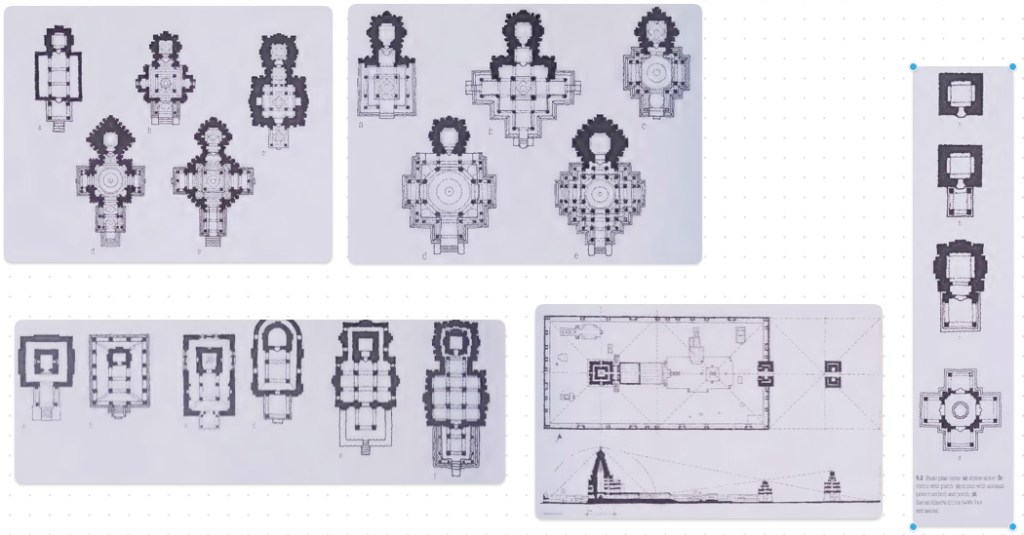
- To make the temple assets, I read a fair bit of “Temple Architecture of India”(Hardy n.d.)
- Research on how shrines, sanctums and mandalas(courtyards) are built further helped me refine the temple architecture to stay authentic to its nature.
- I hope to be able to learn the rules before I break them.
Unity Development
- I chose to build my game on Unity because thats the engine I am the most familiar and comfortable with, and I want to grow more in the engine too, since I like it because of its more platform independent nature compared to other engines.
- I started working with what I already have, things like code from the game about fumage could be re used to work with a drawing mechanic.
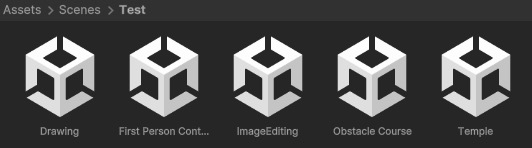
- All these scenes were built separately into a ‘test’ folder, so I could assemble the game later.
- I prototyped the various builds on my phone using unity remote. Although this worked, I ran into a couple of huge problems, which I will get into later.
Game Art
- In the beginning, before researching about temple architecture, I tried to make a simple playground using what I knew about temples from my own experience, and what I would think could be fun.
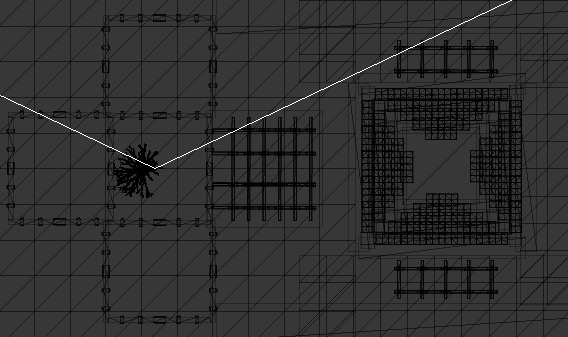
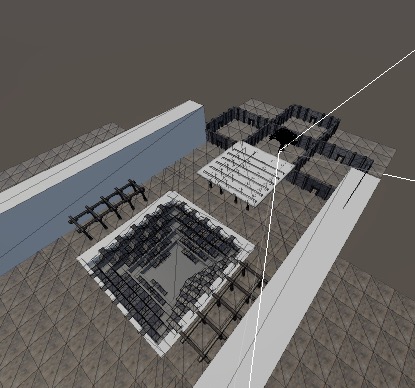
- Upon very early play testing, I liked how the players would interact with the step well architecture, it turned into a point of interest and I knew this had to stay in the game.
- After having done the research, I decided on making the final build with final assets, mostly so I can get certain assets out of the way and re use them if I have to.
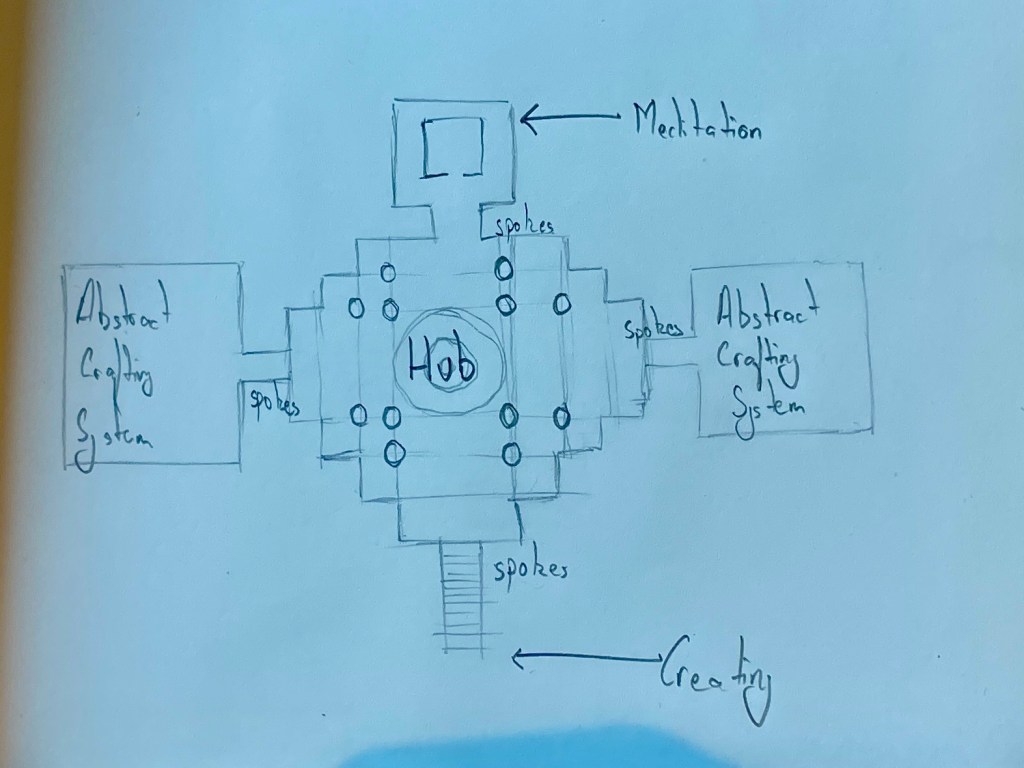
- I decided on making a structure with a small shrine and a large courtyard, where the shrine would be the meditation room, and the courtyard would lead to other “abstract crafting systems” rooms, inspired by the hub and spoke design from “Advanced Game Design”(Adams and Dormans 2012) explanation of zeldas’ systems.
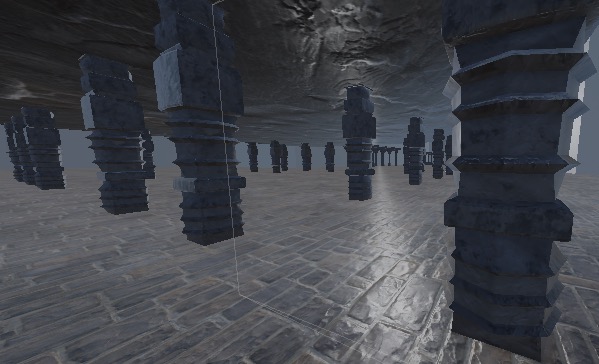
- I used Maya and Substance Painter to make all the models and Unity to block everything out.


Further development
- Having written out every script, I gradually realised that it was a huge pain for me to playtest everything through unity remote, because a lot of things worked differently between my Mac, the remote, and the final build.
- I couldn’t afford to waste time synchronising all these things to work the way I wanted them to, so on the last minute I decided to just simply build for Mac and PC, since it can be ported to mobile later much more simply using Unity’s new input system.
- This makes it easy for me to be able to share the game to as many people as possible, and eliminates the pain of prototyping on phone.
- Doing this broke the entire game, which interfered with my play testing schedule.
- I made the meditation clip as well, using 3 tracks with the VoiceOver, the music and the timer, and then duplicated renders as I removed each track, to gradually reduce the scaffolding for the player.
Bibliography
ADAMS, Ernest and Joris DORMANS. 2012. Game Mechanics: Advanced Game Design. New Riders.
EASWARAN, Eknath. 2010a. ‘Ch6. The Practice of Meditation’. In The Bhagvad Gita. 133.
EASWARAN, Eknath. 2010b. ‘Ch7. Wisdom from Realization’. In The Bhagvad Gita. 147.
EASWARAN, Eknath. 2010c. The Bhagvad Gita.
HARDY, Adam. n.d. ‘The Temple Architecture of India’.
 Avi
Avi 
Leave a comment