
सांख्य (Samkhya)
Meaning “Enumeration”
Concept
A deep game based on an ancient Indian philosophy (Samkhya) and derealisation.
What is Samkhya?
Sāṃkhya is an ancient indian school of philosophy. It is known for being one of the most foundational systems of indian thought, and has deeply influenced schools like yoga and vedanta.
Samkhya is a dualistic philosophy with two realities:

Prakriti — The source of the material world. It is dynamic and active, and thought of to be nature and matter.
Purusha — Pure Consciousness. It is the silent witness, unchanging and passive.

Samkhya as ‘Enumeration’
The direct translation of Samkhya is “enumeration” or “relating to number“. This is because Samkhya describes various sets of enumerations. Here are a few that serve as good examples:
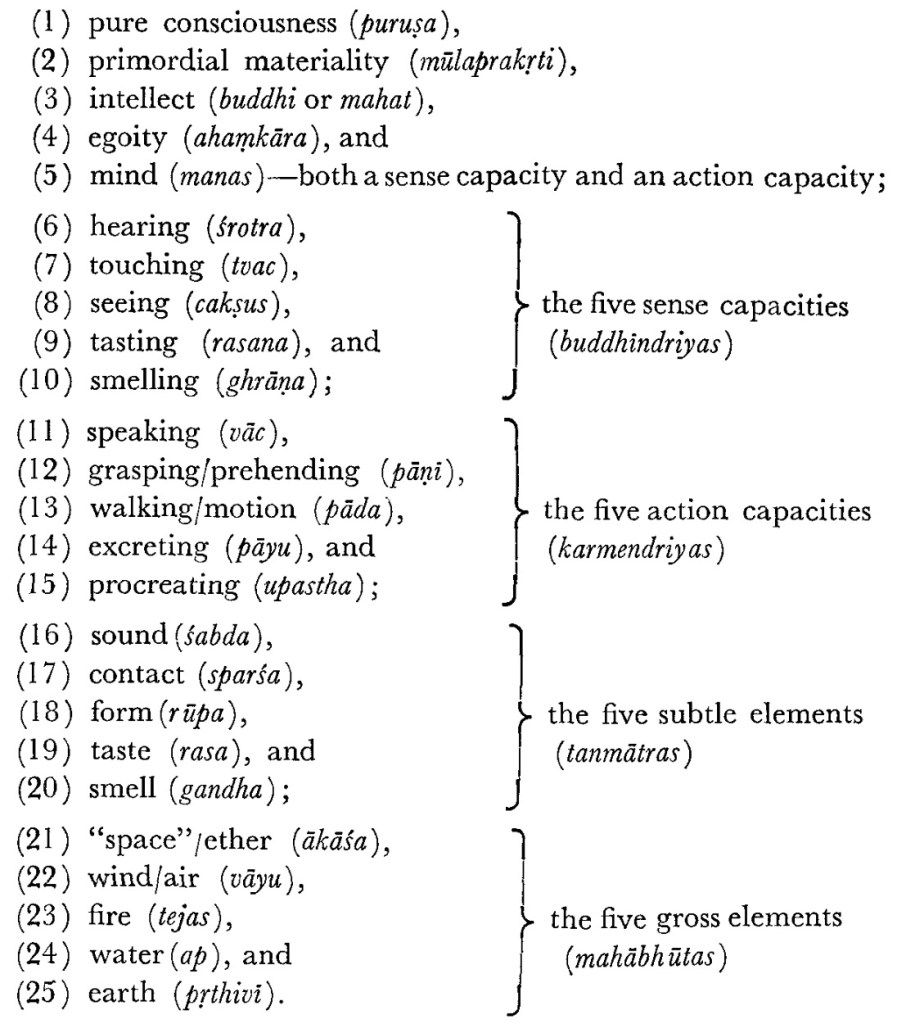
The set of 25 basic principles
The set of 25 that encompasses the basic attributes of the system.
The set of predispositions
The basic instinctual predispositions that may guide the trajectory of a life:

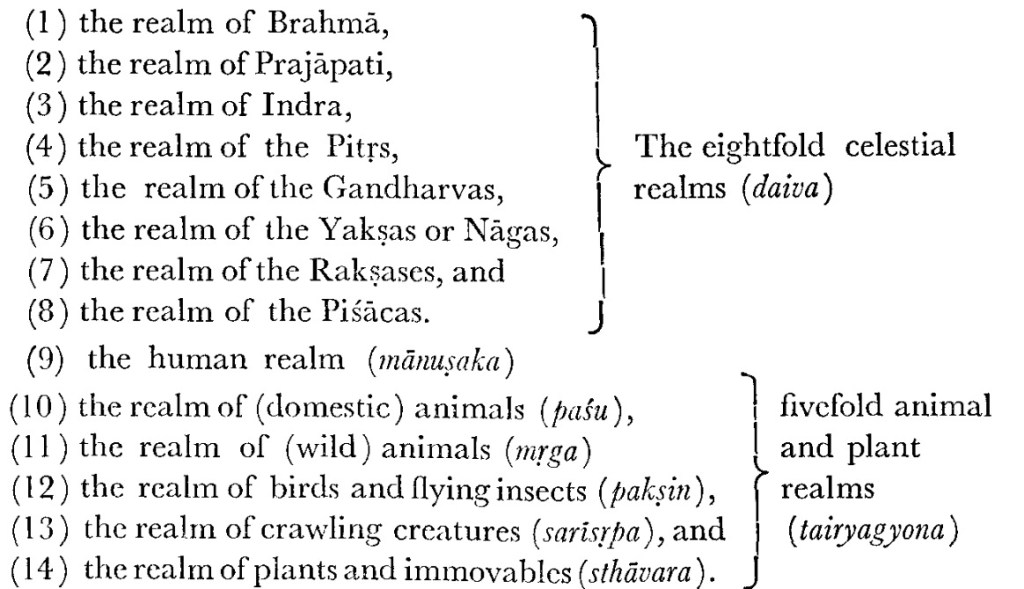
The set of realms
There are 14 types of realms sentient creatures:
Key Research Questions
How can the dualist philosophy of Samkhya be used, to communicate indian culture and emotions through video game mechanics?
How can derealisation be leveraged in video games? Should it be leveraged or is it better to avoid it?

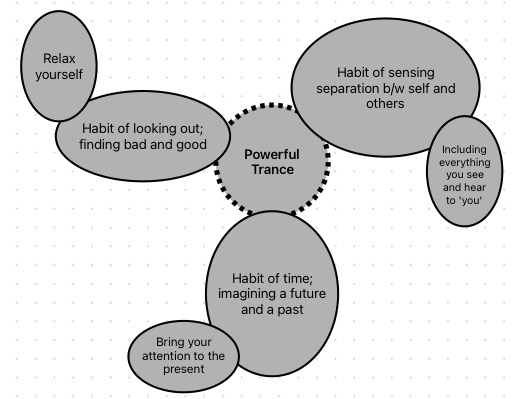
Should meditation be used in video games, and if so, how can meditations be used in video games?
Why it works
- There is a gap in the market for a game that explores indian philosophy, which is fundamental to understanding its culture or people.
- The indian gaming market is one that shows massive potential for growth. (‘Topic: Media and Entertainment in India’ 2025)
- Building a groundwork for people to jump off of and make games for this market proves to be useful.
- Although games like Raji, and Asura exist, they have not been built as deep games, and rather align more into a genre and aim to be more predictably appeasing rather than explore anything new.
Target Audience
There are two sets of audiences:
- The Indian audience is an obvious one, which is a huge growing market by itself but has its own challenges, like access to technology and many people refuse to pay for games. The Indian audience could gain a lot of insight from understanding the dualist philosophy that their cultures and religions have originated from, and the game could also help them with their desire to be represented in a sea of other video games.
- there a general audience that might have the curiosity, and could learn something new or gain some sort of understanding of a different culture. I want to be able to articulate this philosophy in some sense.
Key Issues associated with the Project
- In 1955, Satyajit Ray created Pather Panchali, which was a film that had a lot of dualist themes, like death and impernanence, and modernity and tradition.
- Although this film didn’t do too well in the indian cinema, or the mainstream audience, it inspired many filmmakers around the world like Wes Anderson and Martin Scorsese, who use themes of duality or indian culture in the films that they went on to work on.
- Making a deep game about indian philosophy provides a jumping off point for other creators to use, even if at the risk of not being able to sell the game.
Key Resources
Sāṃkhya
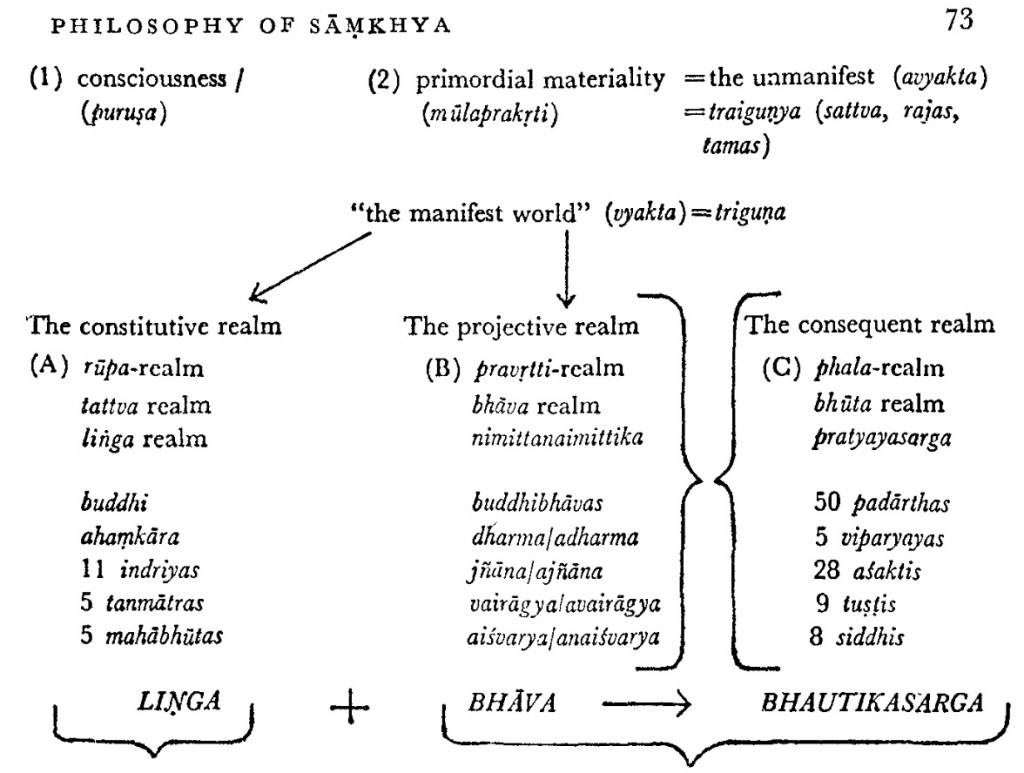
- The main document off of which this project will be built is the “The Philosophy of Samkhya” (‘The Encyclopedia of Indian Philosophies, Volume 4: Samkhya, A Dualist … – Gerald James Larson, Ram Shankar Bhattacharya – Google Books’ 2025).
- The direct translation to Samkhya is “enumeration”, and the document explores the various attributes and enumerations of Samkhya, and how these connect together to form a cohesive viewpoint for the workings of the mind and metaphysics.
- Something that ties in a lot of the research I’ve found, is a documentary I found on YouTube called “The History of Yoga” (‘(245) History of Yoga Full Film English – YouTube’ 2025)
Game Design
- It’s important to know, that Samkhya alone cannot provide enough knowledge to build a game out of. The game needs to be fun, and that means that cutting out, and moulding the research is important to be able to communicate the idea.
- “The art of game design“(‘The Art Of Game Design’ 2025) and “advanced game design“(Sellers 2018) are two books that I keep coming back to when I start with the preproduction of any game, and serve as a good foundation.
- I am also looking into other literature, like “building deep games” (Rusch 2017), academic literature on building meditative apps(Lukoff et al. 2020), the processes of making games like journey(‘(245) The Art of Journey – YouTube’ 2025), and whatever else I can get my hands on.
- “Wandering Games”(‘Wandering Games’ n.d.) provides a good wealth of information on creating walking simulator games.
- There is a lot of potential for making games for a VR platform, since meditation and VR is an up and coming market.
- Other state of the art technologies and jumping off points that could be used, include but are not limited to: Procedural generation, AI co-creation, Emotional design, research on short-form and repayable gameplay and minimalist games
Game Art
- Indian art is a topic that gets talked about a lot. Although there is so much, I was recommended “A Rasa Reader”(‘A Rasa Reader | Columbia University Press’ 2025) and “A students handbook of indian aesthetics“(‘(PDF) A STUDENT’S HANDBOOK OF INDIAN AESTHETICS NEERJA A CONTENTS’ 2025) by William Huber
- There are also various architectural studies that could be used in the game. In a previous attempt at making something similar, I used temple architecture and received praise for the step well architecture and how it could be used in a game. “The temple architecture of India”(Dr. N. C. Panda and Emani 2018) and “Temples of South India”(‘Temples of South India – V. V. Subba Reddy – Google Books’ 2025) goes into much more detail regarding the topic, along with articles that talk about the Indus Valley civilisation.
- Something that I haven’t paid enough attention to in my previous projects, but plan to improve on in this one, is game feel. I plan to read “Game feel”(Swink 2009) for this.
Indian art is a topic that gets talked about a lot. Although there is so much, I was recommended “A Rasa Reader”(‘A Rasa Reader | Columbia University Press’ 2025) and “A students handbook of indian aesthetics“(‘(PDF) A STUDENT’S HANDBOOK OF INDIAN AESTHETICS NEERJA A CONTENTS’ 2025) by William Huber
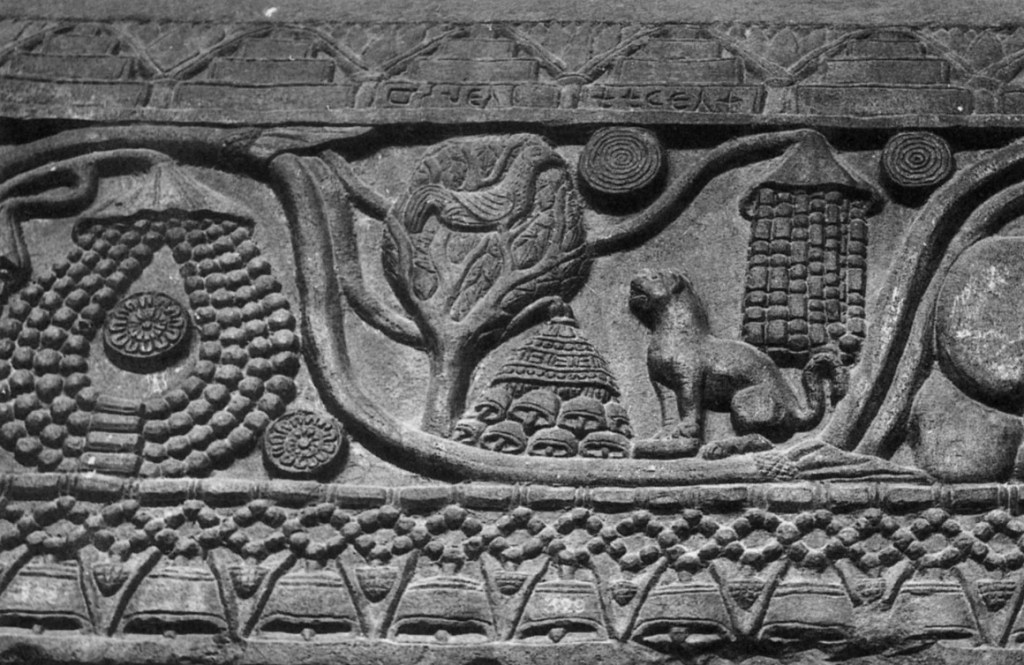

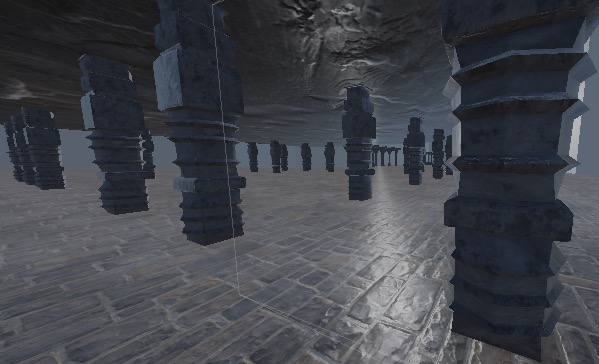
There are also various architectural studies that could be used in the game. In a previous attempt at making something similar, I used temple architecture and received praise for the step well architecture and how it could be used in a game. “The temple architecture of India”(Dr. N. C. Panda and Emani 2018) and “Temples of South India”(‘Temples of South India – V. V. Subba Reddy – Google Books’ 2025) goes into much more detail regarding the topic, along with articles that talk about the Indus Valley civilisation.
Something that I haven’t paid enough attention to in my previous projects, but plan to improve on in this one, is game feel. I plan to read “Game feel”(Swink 2009) for this.
Approach
Final Artefact Format



- I want to make a prototype of a game in Unreal Engine.
- I have done experimentation previously with making a game with samkhya philosophies and learning unreal engine:
Previous related projects:
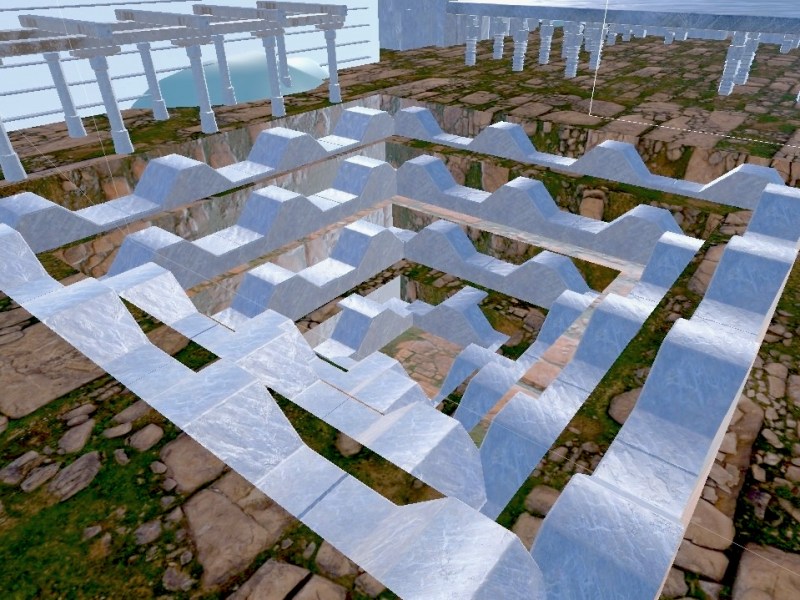
Illusion and Reality Experimental Game
link to game — https://aviparmar.itch.io/samkhya-illusion-reality-experimental-game Brief Description You are a god. Through mind, matter and spirit, you create a temple of your work. The objective…
Keep reading
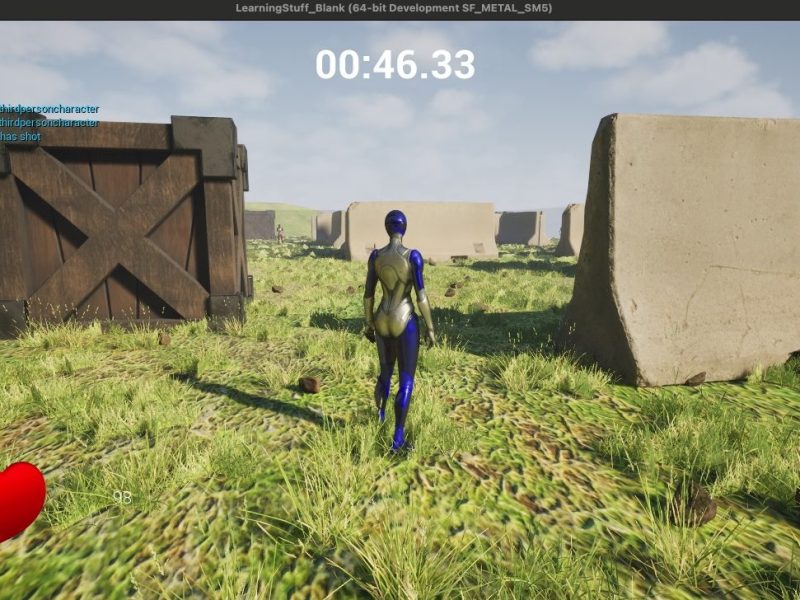
Creating Combat in Unreal Engine 5
link to play — https://aviparmar.itch.io/combat-in-unreal-engine-5 Brief I attempted to create a version of the popular Atari game ‘Combat’ in Unreal Engine using third-person controller templates…
Keep reading
Timeline
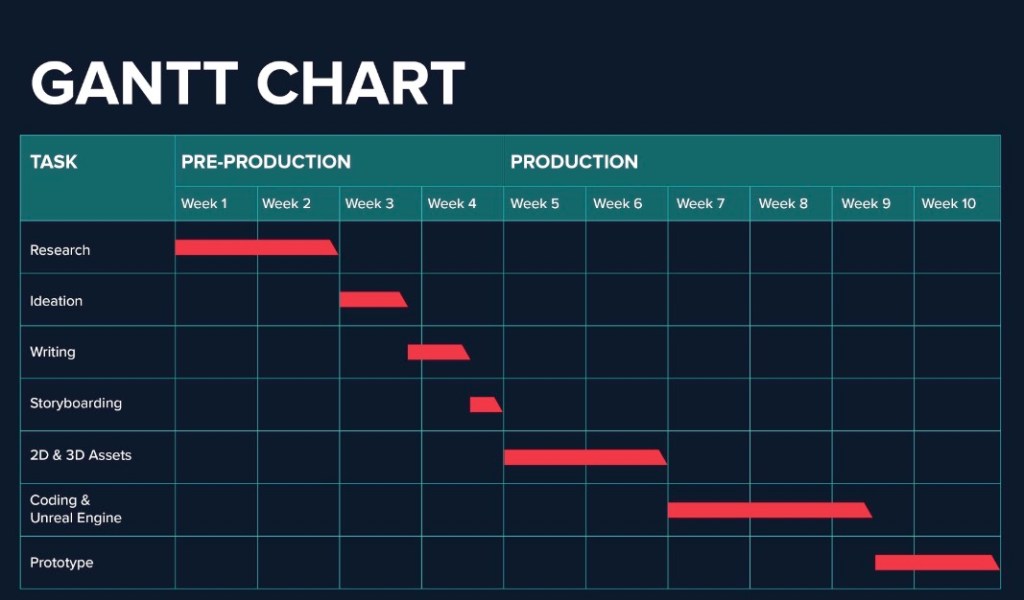
- I’ve learnt from working on previous projects, that dedicating a high amount of time on researching, and getting the initial idea right, is extremely important for developing a prototype.
- At the same time, I want to acknowledge that I’m new to working with Unreal Engine, and would require some buffer time in case I run into any problems.
- On a high level, I have about 10 weeks left, assuming that everything goes smoothly, I want to dedicate about 4 weeks to pre production and 6 weeks to production, with the aim of making a high quality vertical slice prototype that is open for changes and easily scalable to a full game after the end of the thesis project.
- I also want to integrate learnings from my previous projects, like maintaining a git repo, a QA Excel Sheet and a agile scrum system to log all my tasks.
Bibliography
‘(118) Designing a Trance: Meditation and Game Design – YouTube’. 2025. [online]. Available at: https://www.youtube.com/watch?v=zZ8BFsdbem0 [accessed 18 Feb 2025].
‘(245) History of Yoga Full Film English – YouTube’. 2025. [online]. Available at: https://www.youtube.com/ [accessed 17 Jun 2025].
‘(245) The Art of Journey – YouTube’. 2025. [online]. Available at: https://www.youtube.com/ [accessed 17 Jun 2025].
‘(257) In Praise of Satyajit Ray – YouTube’. 2025. [online]. Available at: https://www.youtube.com/ [accessed 21 Jun 2025].
‘A Rasa Reader | Columbia University Press’. 2025. [online]. Available at: https://cup.columbia.edu/book/a-rasa-reader/9780231173919/ [accessed 17 Jun 2025].
ADAMS, Ernest. 2018. Advanced Game Design: A Systems Approach. Boston Amsterdam London: Addison-Wesley.
DEHEJIA, Vidya. 1990. ‘On Modes of Visual Narration in Early Buddhist Art’. The Art Bulletin 72(3), 374–92.
DR. N. C. PANDA and Dr Sivanagi Reddy EMANI. 2018. Temple Architecture of India. First Edition. Delhi (India): Bharatiya Kala Prakashan.
‘India: Value of the Media and Entertainment Industry 2026’. 2025. Statista [online]. Available at: https://www-statista-com.eu1.proxy.openathens.net/statistics/235784/india-value-of-the-media-and-entertainment-industry/ [accessed 20 Jun 2025].
LUKOFF, Kai et al. 2020. ‘From Ancient Contemplative Practice to the App Store: Designing a Digital Container for Mindfulness’. In Proceedings of the 2020 ACM Designing Interactive Systems Conference. 1551–64. Available at: http://arxiv.org/abs/2006.09521 [accessed 4 Feb 2025].
Pather Panchali [Film]. 1955. Government of West Bengal.
‘(PDF) A STUDENT’S HANDBOOK OF INDIAN AESTHETICS NEERJA A CONTENTS’. 2025. ResearchGate[online]. Available at: https://www.researchgate.net/publication/357866846_A_STUDENT’S_HANDBOOK_OF_INDIAN_AESTHETICS_NEERJA_A_CONTENTS[accessed 17 Jun 2025].
RUSCH, Doris C. 2017. Making Deep Games : Designing Games with Meaning and Purpose. Boca Raton, FL : CRC Press, Taylor & Francis Group. Available at: http://archive.org/details/makingdeepgamesd0000rusc [accessed 17 Jun 2025].
SWINK, Steve. 2009. Game Feel: A Game Designer’s Guide to Virtual Sensation. Morgan Kaufmann Publishers/Elsevier.
‘Temples of South India – V. V. Subba Reddy – Google Books’. 2025. [online]. Available at: https://books.google.co.in/books?hl=en&lr=&id=c08qf7d2TZQC&oi=fnd&pg=PA3&dq=temples+of+south+india&ots=H0gisoo6WI&sig=KHJMUEBCd7gVYx3yrzvpZ97CmXE&redir_esc=y#v=onepage&q=temples%20of%20south%20india&f=false[accessed 17 Jun 2025].
‘The Art Of Game Design’. 2025. Schell Games [online]. Available at: https://schellgames.com/art-of-game-design[accessed 17 Jun 2025].
‘The Encyclopedia of Indian Philosophies, Volume 4: Samkhya, A Dualist … – Gerald James Larson, Ram Shankar Bhattacharya – Google Books’. 2025. [online]. Available at: https://books.google.co.in/books?hl=en&lr=&id=bqr_AwAAQBAJ&oi=fnd&pg=PP1&dq=philosophy+of+samkhya&ots=85Dpyreu1D&sig=dLe-85tC1EK3Huxv_Q7nsh_pzKc&redir_esc=y#v=onepage&q=philosophy%20of%20samkhya&f=false [accessed 17 Jun 2025].
‘Topic: Media and Entertainment in India’. 2025. Statista [online]. Available at: https://www-statista-com.eu1.proxy.openathens.net/topics/7243/media-and-entertainment-in-india/ [accessed 20 Jun 2025].
‘Wandering Games’. n.d. MIT Press [online]. Available at: https://mitpress.mit.edu/9780262544245/wandering-games/[accessed 17 Jun 2025].
 Avi
Avi 
Leave a comment